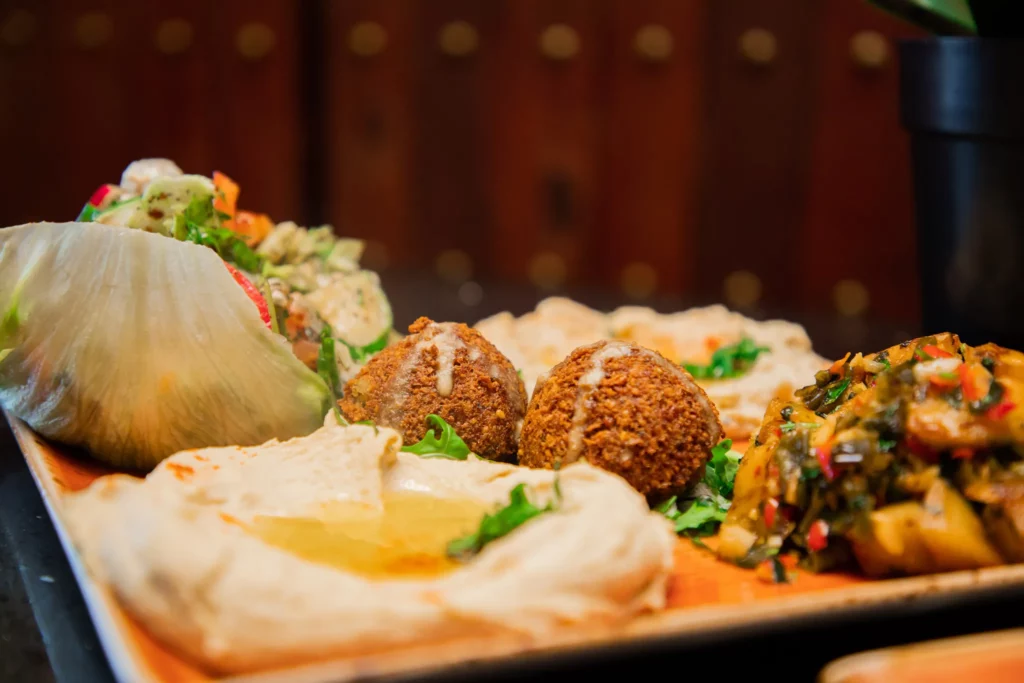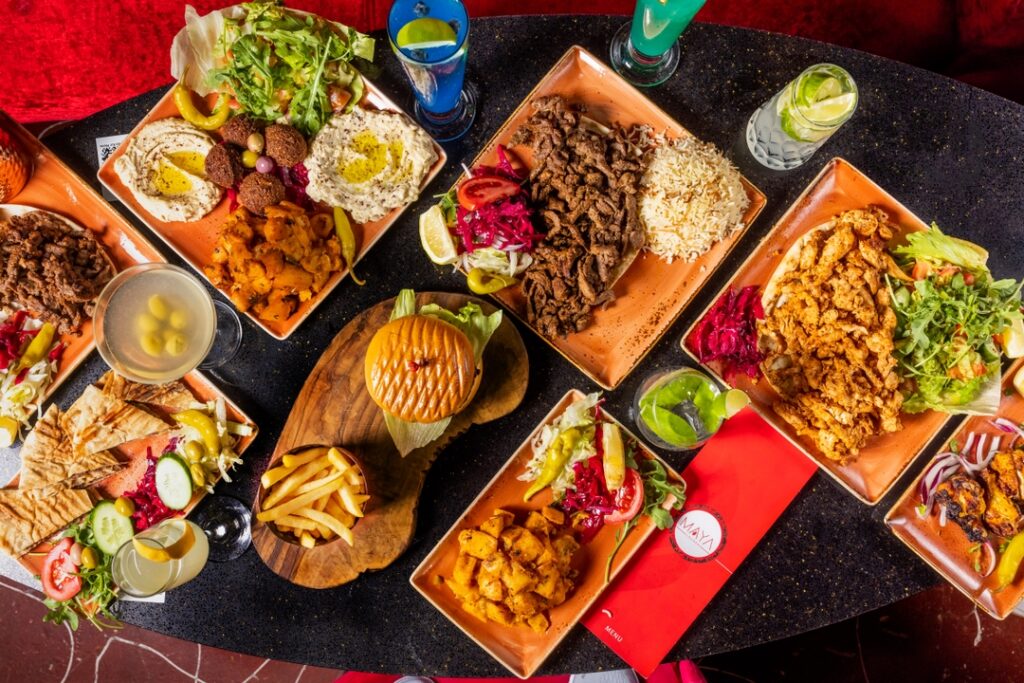
Moutabbal: smoky aubergine on the mezze table
Moutabbal is a purée of grilled aubergine with sesame oil and lemon, £9.50 at Maya Lounge. What sets it apart from hommous and baba ghanoush, and what to put beside it.
By mayalounge.co.uk · · 3 min read
WHETSTONE, LONDON Moutabbal is the smoky dish among the cold starters at Maya Lounge: a purée of grilled aubergine with sesame oil and lemon, £9.50 on the food menu and tagged v. The smoke is the point of the dish, and in the traditional method it comes from cooking the aubergine over an open flame.
The aubergine is traditionally roasted or broiled over an open flame before it is peeled, which gives the smoky taste.
What moutabbal is
Mutabbal, as it is often spelt in English, is made with mashed grilled aubergine and tahini. The aubergine is traditionally roasted or broiled over an open flame before it is peeled, which gives the smoky taste. It is a typical meze, eaten as a dip with pita bread, and its origin is the Levant, with strong associations with Lebanon and Syria.
Maya’s menu describes its version as a purée of grilled aubergine with sesame oil and lemon. As with hommous, sesame is in the description, so guests with an allergy should tell the team before they order. The menu does not say how the aubergine is grilled, so the method is for the kitchen to describe.
Moutabbal and baba ghanoush
Moutabbal is sometimes called baba ghanoush, and the two names overlap. The difference, as one reference source states it, is that mutabbal is made with tahini while baba ghanoush does not necessarily have tahini. Beyond that, recipes vary from kitchen to kitchen, so the menu description is the most reliable guide to what arrives at your table.
Next to the hommous
Both dips are purées, both come from the Levant and both are eaten with bread, which is why they are so often ordered together. The base is what separates them: hommous at £9 starts from chickpeas, while moutabbal starts from aubergine, and the grilling gives it a smokier edge. Ordering one of each gives a table two versions of the same idea. The other half of the pair is described in the chickpea dip story.
Bread and company
The bread matters as much as the dip. Lebanese bread, also called khubz or pita, is a round yeast-leavened flatbread that puffs into a pocket when baked at a high temperature, and it is used to scoop up dips. Maya’s kitchen describes its mezze as starting with hommous, moutabbal and tabouleh, which tells you where moutabbal belongs: at the beginning of the meal, with company.
Put the dips in the middle and add contrast. Tabouleh at £9.50 brings parsley, mint, tomato and lemon. Falafel at £9 brings deep-fried chickpea croquettes served with tahini. Batata Haraa at £9 adds potatoes with garlic, coriander, spices and peppers. If you would rather not choose, the Mixed Mezze at £27 includes hommous and moutabbal, with hot batata harraa and falafel salad, and serves four.
In the Levant a mezze can be a meal in itself, arriving in sequence, and the emphasis is on sharing and taking time. A dip like moutabbal suits that pace, since a table can keep returning to it between other dishes.
Before you come
Maya Lounge opens at 6pm, and booking ahead is recommended at weekends and on event nights. Guests are asked to arrive 15 minutes before their reservation time. Free on-site parking is available, subject to availability.